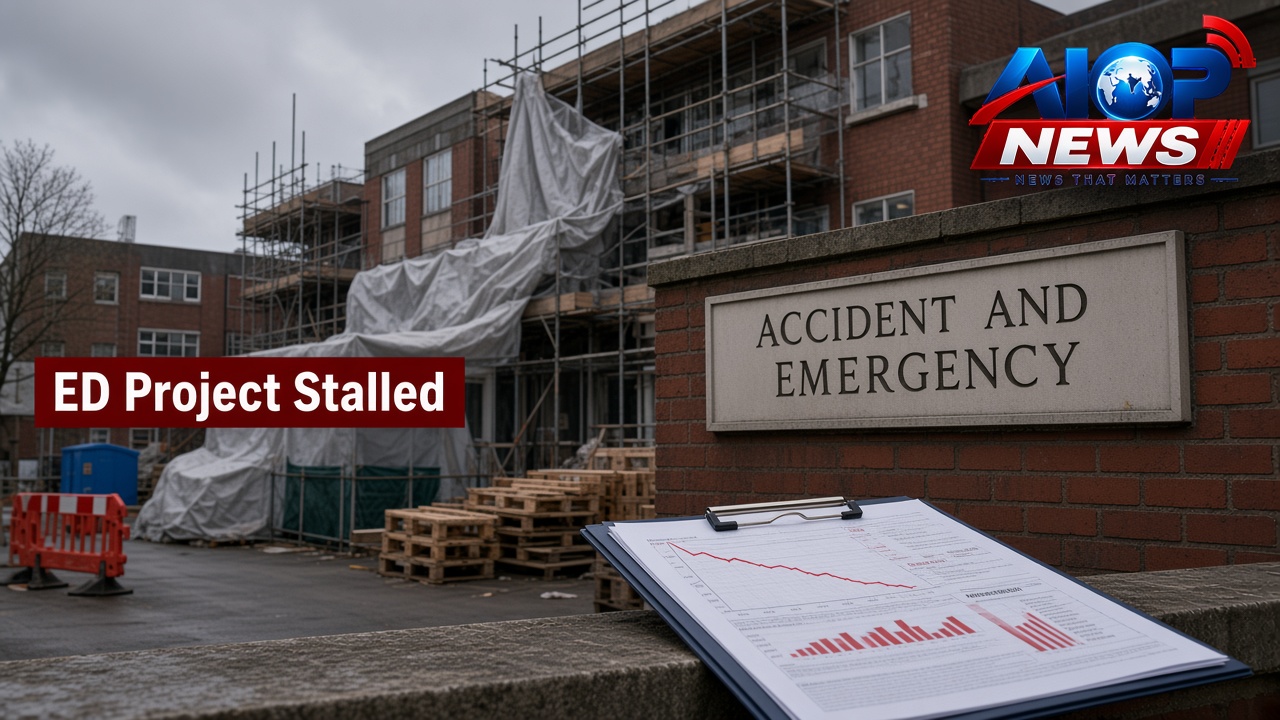
Altnagelvin Hospital's Priority ED Project Stalled by Funding Shortfall, Minister Confirms
Derry, Northern Ireland – October 16, 2026 – Hopes for a critical upgrade to emergency care in Derry have been tempered by an official announcement from Minister Robbie Butler. Despite acknowledging the pressing need for a new Emergency Department (ED) at Altnagelvin hospital, the Minister has confirmed that the necessary funds to proceed with the project are currently unavailable.
The revelation comes amidst ongoing pressures on healthcare services, highlighting the persistent challenge of balancing essential infrastructure development with tight public finances. The proposed new ED is widely regarded as a vital improvement to regional healthcare capacity and patient care delivery.
A Stalled Priority: The Minister's Statement
Minister Robbie Butler's statement underscores a concerning reality for healthcare planning. While categorizing a new Emergency Department at Altnagelvin hospital as a "priority," he explicitly stated the absence of the financial resources required to bring the project to fruition. This creates a significant dilemma: a recognized, urgent need that cannot be addressed due to budgetary constraints.
The sentiment expressed by the Minister resonates with broader discussions surrounding public health funding across the region. Hospitals, like Altnagelvin, serve as critical hubs for their communities, and improvements to facilities such as the ED directly impact the quality and accessibility of emergency medical services. The lack of funding for such a crucial development is likely to spark further debate on governmental spending and healthcare investment strategies.
Impact on Emergency Services and Patient Care
The delay in constructing a new Emergency Department at Altnagelvin hospital carries significant implications for patient care and the wider healthcare system in Derry and the surrounding areas. Emergency departments are often the frontline of hospital care, managing everything from critical injuries and illnesses to urgent medical conditions. An outdated or overstretched facility can lead to longer waiting times, increased staff pressure, and potentially compromised patient outcomes.
A new ED would typically offer enhanced capacity, modern equipment, and improved layouts designed to optimize patient flow and care efficiency. The absence of these upgrades means the existing department must continue to bear the brunt of rising demand, potentially exacerbating existing challenges. This situation directly impacts the delivery of essential health services to thousands of individuals who rely on Altnagelvin hospital for their emergency medical needs.
The Critical Role of Altnagelvin Hospital
Altnagelvin hospital stands as a cornerstone of healthcare provision in Derry. It serves a large population, acting as a key referral centre for various medical specialties. The Emergency Department, in particular, is a high-volume area, experiencing constant demand. Modernising this vital component of the hospital infrastructure is not merely about expansion; it's about future-proofing healthcare services to meet evolving demographic needs and medical advancements.
Stakeholders, including healthcare professionals, patient advocacy groups, and local residents, have consistently voiced the importance of investing in facilities like a new ED. The Minister's acknowledgement of its priority status confirms the widespread consensus on its necessity, making the funding shortfall all the more frustrating for those concerned about public health provision.
Addressing the Funding Gap: What's Next?
While Minister Butler has highlighted the financial impediment, the statement does not outline immediate solutions for overcoming this funding gap. The challenge for policymakers will be to identify sustainable funding mechanisms or reallocate existing resources to enable the Altnagelvin ED project to move forward. This could involve cross-departmental discussions, bids for national funding, or innovative financing models.
The ongoing pressure on emergency departments nationwide underscores the urgency of this issue. As of October 16, 2026, the focus remains on how governmental bodies will address this critical investment shortfall in a project deemed essential for the health and well-being of a significant population.
Conclusion: A Priority Awaiting Investment
The announcement from Minister Robbie Butler regarding the new Emergency Department at Altnagelvin hospital paints a clear picture: a vital infrastructure project is on hold, not due to lack of necessity, but due to a lack of funds. The project's "priority" status, as confirmed by the Minister, contrasts sharply with the current financial reality, leaving the community and healthcare providers in a state of uncertainty.
Ensuring adequate investment in public health infrastructure, particularly in critical areas like emergency care, remains a paramount concern for governments. The situation at Altnagelvin hospital serves as a stark reminder of the difficult choices faced in healthcare funding and the significant impact these decisions have on the lives of ordinary citizens. Further updates on this critical issue will be closely monitored. (Source: BBC News)