The Hidden Intersection of Literacy and Numeracy
For decades, the educational landscape has treated mathematics and language arts as distinct, siloed disciplines. However, a growing consensus among pedagogical experts suggests that this division is a disservice to students. As highlighted in a recent report from Education Week, the reality of the modern classroom is that every math educator is, by necessity, a language teacher.
Understanding complex mathematical concepts is not merely about calculating a result; it is about interpreting the narrative of a problem. When a student reads a word problem, they are navigating syntax, vocabulary, and logical structure. Without strong literacy skills, even the most gifted arithmetic minds can struggle to unlock the potential of higher-level mathematics.
Decoding Mathematical Language
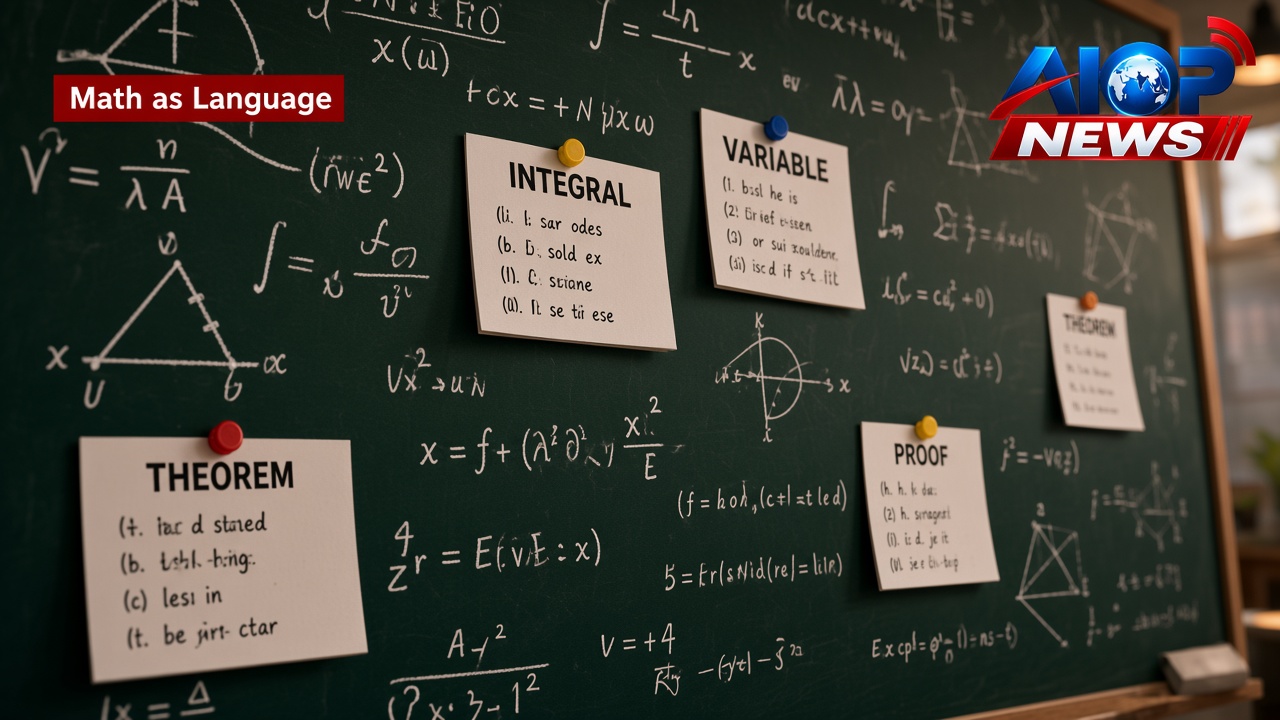
Mathematics is a language in its own right, possessing its own grammar, symbols, and unique vocabulary. Terms like "quotient," "variable," and "equivalent" act as academic signposts. When a teacher fails to explicitly teach these terms, they leave students to decode the language on their own, often leading to deep-seated frustration and math anxiety.
The Role of Discourse in the Classroom
Effective math instruction now emphasizes "mathematical discourse." This involves encouraging students to explain their reasoning, argue for their solutions, and critique the strategies of their peers. By prioritizing verbal and written communication, teachers help students bridge the gap between abstract calculation and concrete understanding. This is a core pillar of modern Education strategies, which aim to develop critical thinkers rather than rote memorizers.
Bridging the Achievement Gap
The intersection of language and math is particularly critical for English Language Learners (ELLs) and students from diverse linguistic backgrounds. When math is taught in a vacuum, these students face a double burden: learning the logic of the problem while simultaneously grappling with the linguistic barriers of the presentation. By adopting literacy-based strategies—such as graphic organizers, vocabulary previewing, and visual prompts—math teachers can create a more inclusive learning environment.
Practical Strategies for Educators
- Vocabulary Building: Dedicate time to deconstructing key math terms before introducing complex equations.
- Scaffolded Writing: Encourage students to write "math biographies" or explanations of their solution paths to foster deeper cognitive processing.
- Active Listening: Use peer-to-peer discussions to ensure students are comfortable verbalizing their mathematical thinking in front of others.
The Future of STEM Education
As the demand for STEM-literate workers grows, the ability to translate complex data into clear, actionable narratives is becoming a top priority. Teachers who embrace their dual roles as mathematicians and linguists are better equipped to prepare students for a workforce that requires both analytical power and strong communication skills. By integrating reading and writing into the math curriculum, we ensure that students are not just solving for 'x,' but are learning to articulate the 'why' behind the math.
Concluding Summary
The assertion that every math educator is also a language teacher is more than a pedagogical trend; it is a fundamental shift in how we approach student success. By recognizing the linguistic demands inherent in mathematics, educators can dismantle barriers to learning and foster a deeper, more robust understanding of the subject. As we continue to refine our teaching methodologies, the synergy between literacy and numeracy will remain at the heart of effective classroom practice.