A Potential Shift in the Global Corporate Landscape
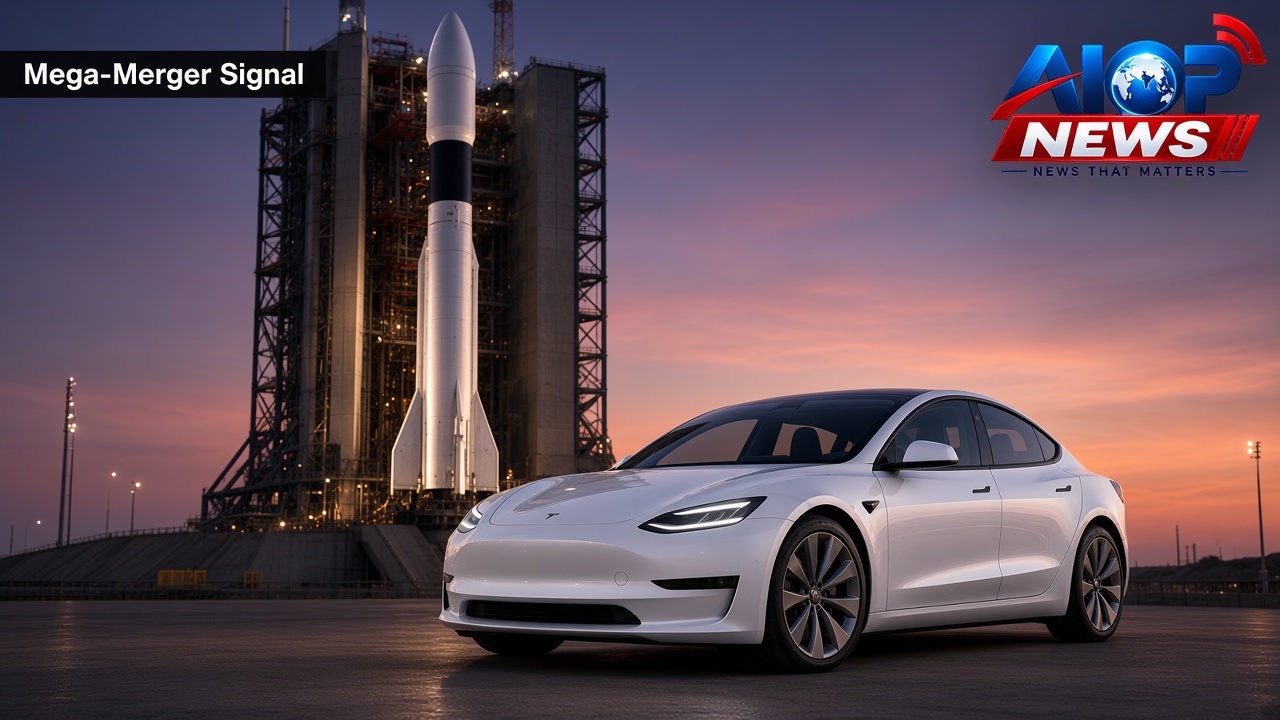
In a move that has sent ripples through the global financial and technology sectors, Elon Musk has signaled his intentions to explore a mega-merger between his two most prominent companies: Tesla and SpaceX. As of October 21, 2026, the discussions surrounding this consolidation suggest it could become the largest merger in corporate history, fundamentally altering the trajectory of both the automotive and aerospace industries on an international scale.
According to recent reports, Musk believes there is "a lot to be gained" by combining the firms. While the two entities have long operated as separate giants—one dominating the electric vehicle (EV) and renewable energy markets, the other leading the private space exploration sector—the prospect of a unified powerhouse suggests a strategic alignment of resources, engineering talent, and long-term vision.
The Strategic Vision: "A Lot to be Gained"
While the specific operational details of the merger remain under discussion, the core motivation cited by Musk is the significant synergy potential between the two companies. Tesla’s advancements in battery technology, autonomous systems, and manufacturing efficiency could theoretically provide immense value to SpaceX’s mission of interplanetary travel and satellite deployment. Conversely, SpaceX’s expertise in materials science and high-stress engineering could push Tesla’s terrestrial products to new heights.
The move is being framed not just as a financial consolidation, but as a technological leap. By merging, the two companies would be able to share intellectual property and research more fluidly, potentially accelerating innovation in ways that separate corporate structures currently hinder. For more updates on how this affects global markets, visit our International news section.
The Biggest Merger in History
The sheer scale of this proposed union cannot be overstated. If finalized, the SpaceX-Tesla merger would surpass all previous corporate combinations in total valuation and market influence. In the context of international business, a combined Musk entity would hold a unique position, wielding influence over both global transportation and the burgeoning space economy.
Analysts are already looking at how this might impact competition. A single entity controlling the most successful private rocket company and the world’s leading EV manufacturer would create a conglomerate with unparalleled reach. This development is being closely watched by regulatory bodies worldwide, as the implications for market competition and technological standards are vast.
International Implications and Global Reach
The news of a potential merger has significant ramifications for international relations and global trade. SpaceX currently plays a critical role in global communications through its satellite networks, while Tesla’s supply chains span across multiple continents. A merger would centralize these critical global infrastructures under one corporate banner, potentially complicating or streamlining international logistics depending on regulatory responses.
As the world watches these developments, the focus remains on how Musk will navigate the complex legal and logistical hurdles of merging a public company like Tesla with a private giant like SpaceX. The international community is particularly interested in how this will affect existing contracts with government agencies and international space partners.
Concluding Summary
The prospect of a SpaceX and Tesla merger marks a pivotal moment in 21st-century industry. Elon Musk’s assertion that there is much to be gained reflects a bold vision for a unified technological future. As the biggest potential merger in history, the move would not only consolidate Musk’s industrial empire but also set a new precedent for how cross-industry innovation is managed on a global stage. Whether this ambitious plan reaches fruition will depend on regulatory approval and the successful integration of two very different corporate cultures.
For further details on the original report, visit the source: BBC News.