A Major Shift in Italian Governance
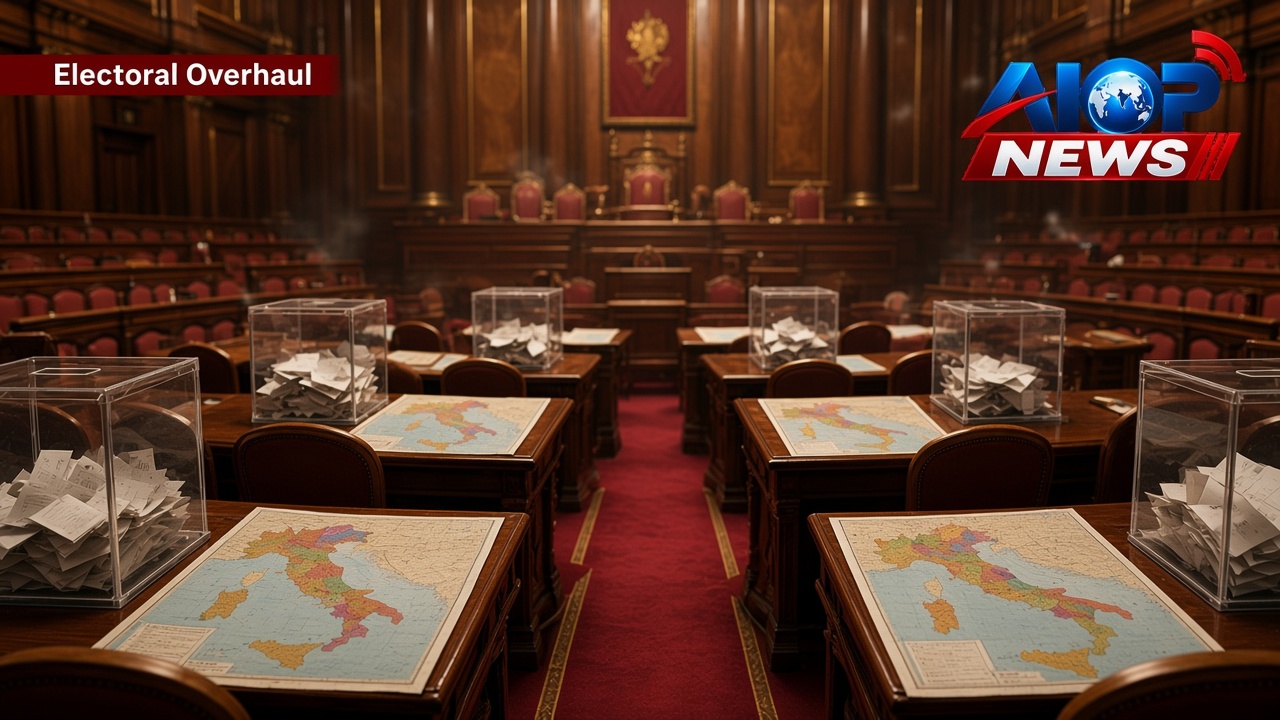
In a move that marks one of the most significant changes to the nation's political framework in recent years, Italy has officially overhauled its electoral system. The decision comes after a period of fiercely contested debate within the Italian parliament and across the broader political landscape. As of today, October 8, 2026, the legislative changes are set to redefine how the country elects its leaders and how future governments are formed.
The overhaul has been a cornerstone of Prime Minister Giorgia Meloni’s legislative agenda. For months, the proposed changes have been the subject of rigorous scrutiny, sparking heated exchanges between the ruling coalition and opposition parties. This development is being closely watched within the International community, as Italy’s political structure often serves as a barometer for broader European political trends.
The Argument for Stability
Prime Minister Giorgia Meloni has been the primary advocate for the reform, asserting that the overhaul is a necessary step to bring an end to the chronic instability that has long characterized Italian politics. Historically, Italy has seen a frequent turnover of governments, often resulting in short-lived administrations that struggle to implement long-term policy goals.
According to Meloni, the new system will deliver a more stable government by streamlining the electoral process and ensuring that the winning coalition has a clearer mandate to lead. The Prime Minister has argued that without these changes, Italy would remain trapped in a cycle of fragile coalitions and political deadlock. By providing a framework for more durable governance, Meloni suggests the country will be better positioned to address economic and social challenges on the world stage.
Opposition Concerns and the Power Debate
While the government presents the overhaul as a victory for efficiency and stability, opposition parties have voiced strong dissent. Critics of the reform argue that the move is less about governance and more about political longevity. Throughout the debate, opposition figures have maintained that Meloni’s primary aim is to restructure the system in a way that makes it easier for her and her party to stay in power.
The fiercest criticisms suggest that the overhaul could undermine democratic checks and balances by concentrating power within the executive branch. Opponents claim that the changes favor the current ruling coalition and could disenfranchise smaller political groups, potentially narrowing the diversity of voices within the Italian parliament. This ideological divide led to the "fiercely contested" atmosphere that preceded the final decision, as lawmakers from across the political spectrum clashed over the future of the nation's democracy.
Implications for International Relations
The restructuring of Italy’s electoral system has implications that extend beyond its borders. As a key member of the European Union and the G7, Italy's internal political mechanics are a matter of significant interest to global partners. A more stable Italian government could lead to more consistent foreign policy and economic strategies, but a system that is perceived as unfairly benefiting the incumbent could create friction with international democratic observers.
As the new system begins to take effect, the focus will shift to how these changes influence future elections and whether the promised stability materializes. For now, the nation remains divided on whether this overhaul represents a necessary evolution of the Italian state or a strategic maneuver to secure long-term control.
This report is based on details provided by the BBC.
Summary of the Overhaul
In summary, Italy's new electoral system represents a pivotal moment for Prime Minister Giorgia Meloni’s administration. By successfully navigating a fiercely contested debate, the government has set a new course for the nation’s political future. Whether this leads to the promised era of stability or confirms the fears of the opposition remains to be seen as the country prepares for its next chapter in governance.