The Ghost in the Machine: Navigating London Without a Driver
Imagine standing on a rain-slicked corner in Central London, hailing an Uber, and watching as a car pulls up with a steering wheel that moves entirely of its own accord. It sounds like the opening scene of a science fiction film, but for a team from the BBC, it recently became a midday reality. As documented in a recent BBC video report, autonomous ride-hailing has officially transitioned from the wide, sun-drenched boulevards of Phoenix, Arizona, to the cramped, historic, and often chaotic streets of the UK capital.
The experience is as much a psychological journey as it is a physical one. For decades, we have associated the act of driving with human intuition—the ability to make eye contact with a cyclist or anticipate a pedestrian’s sudden dash across the road. Seeing a vehicle navigate these micro-interactions using nothing but silicon and sensors is, at first, profoundly unsettling. However, as the BBC’s journey progressed through the heart of London, the initial tension seemingly gave way to a surprising sense of normalcy.
Why London is the Ultimate Litmus Test
It is easy to program a car to drive in a straight line on a highway. It is an entirely different challenge to teach a machine how to handle a London bus pulling out from a stop, a delivery driver on an e-bike swerving through traffic, and the ever-present threat of a sudden downpour. This is where the latest advancements in technology are truly being pushed to their limits. Unlike earlier iterations of self-driving software that relied heavily on pre-mapped routes and rigid rules, the current generation of AI is designed to learn like a human—by observing and reacting to the world in real-time.
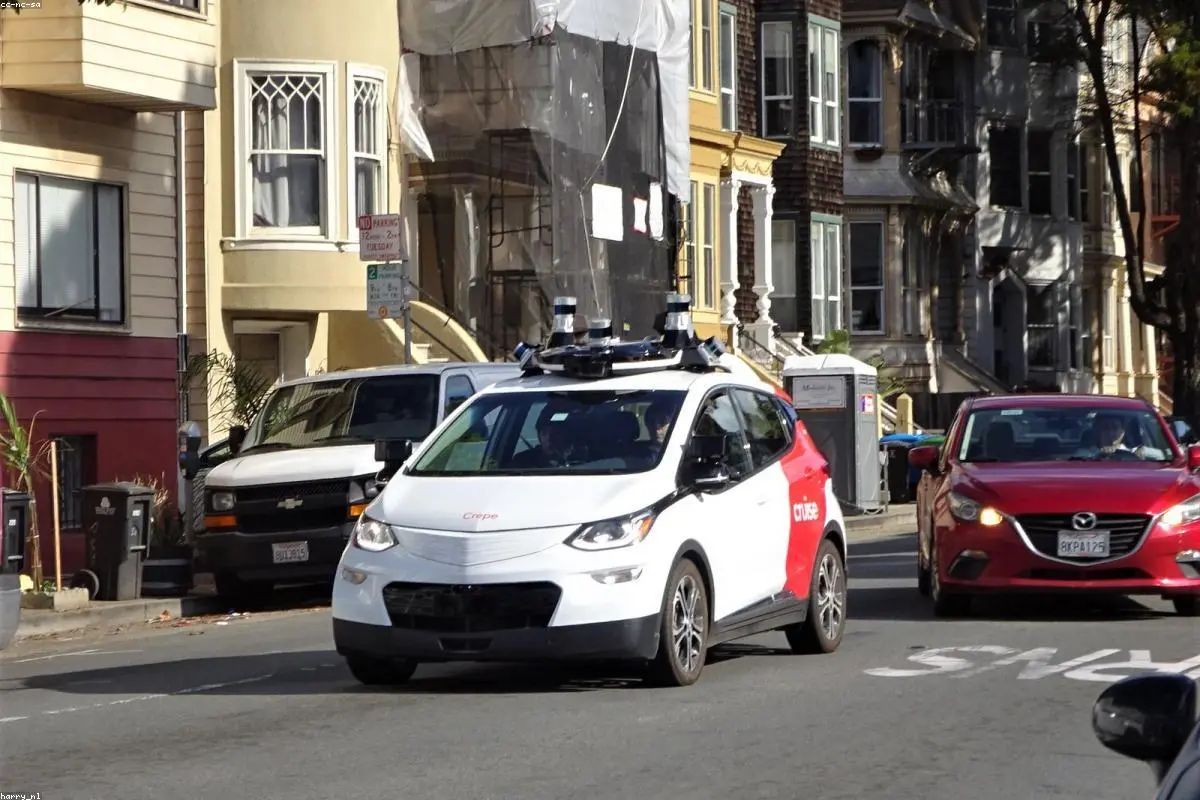
The vehicle used in the demonstration utilizes "embodied AI," a system that processes visual data through cameras rather than relying solely on expensive LIDAR arrays. This allows the car to understand context. For example, it can differentiate between a plastic bag blowing across the street and a small dog running off its leash. During the BBC’s ride, the car’s ability to smoothly merge into heavy traffic without jerky movements suggested that the technology has finally moved past the "robotic" phase and into something more fluid and natural.
The Uber Strategy: From Builder to Platform
Uber’s approach to autonomous vehicles has shifted significantly over the years. After selling off its own self-driving unit, the company has pivoted to becoming the ultimate platform for other developers. By partnering with companies like Wayve—a UK-based startup specializing in autonomous driving—Uber is positioning itself as the bridge between cutting-edge AI and the consumer. This strategy allows Uber to minimize the massive R&D costs of building hardware while ensuring they remain the dominant force in the ride-sharing market as drivers eventually become optional.
This shift is particularly relevant in the UK, where the government recently passed the Automated Vehicles (AV) Act. This legislation provides a clear legal framework for who is responsible if something goes wrong, placing the liability on the developer or the service provider rather than the person sitting in the "driver's" seat. It is this regulatory clarity that has cleared the way for tests like the one the BBC recently joined, signaling that London is ready to become a global hub for autonomous mobility.
The Human Element: Jobs, Safety, and Trust
Despite the technical triumphs, the elephant in the room remains: what happens to the thousands of people who currently make a living driving for Uber? While we are still years away from a total replacement of human drivers, the trajectory is clear. Proponents argue that autonomous cars don’t get tired, don’t look at their phones, and don’t experience road rage. If the technology can eventually prove it is statistically safer than a human driver, the moral argument for adoption becomes almost impossible to ignore.
However, safety is only half the battle; the other half is trust. For many Londoners, the idea of giving up control to an algorithm is a bridge too far. The BBC report highlights this divide—the fascination of the technology versus the inherent human desire for a person behind the wheel. As these cars become a more frequent sight near landmarks like the London Eye or Piccadilly Circus, that skepticism will likely be the biggest hurdle for Uber to overcome.
What Lies Ahead?
The road to a fully driverless London is still under construction. There are questions of infrastructure, data privacy, and how these vehicles will interact with the city’s complex public transport network. But the BBC's ride proves that the "future" is no longer a distant concept. It is here, it is currently navigating the M25 and the narrow streets of Soho, and it doesn’t need a coffee break.
Whether you find it exhilarating or terrifying, the autonomous revolution is picking up speed. As the technology matures, the definition of a "commute" will change forever. We may soon look back on the era of manual driving with the same nostalgia we reserve for horse-drawn carriages—a quaint, somewhat dangerous relic of a time before the machines took the wheel.