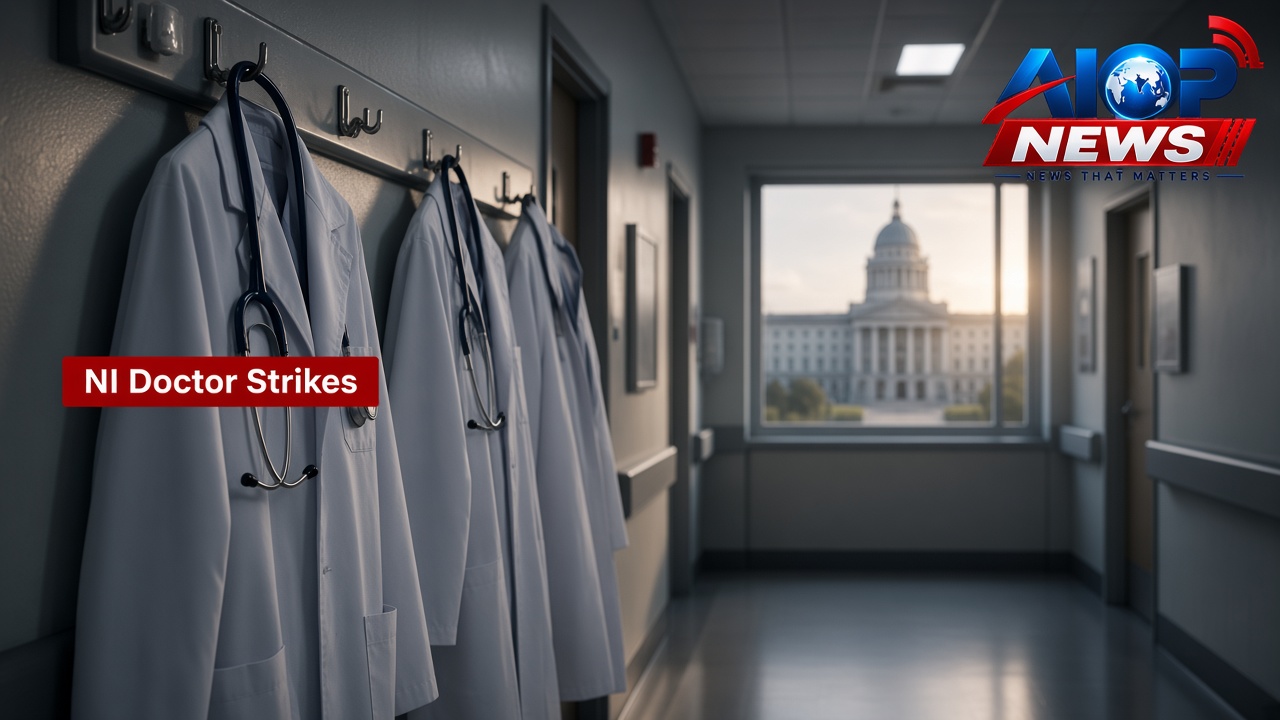
Northern Ireland's Healthcare Crisis: Stormont Budget Delay Sparks Doctor Strikes
Belfast, Northern Ireland – October 18, 2026 – The simmering frustration within Northern Ireland's healthcare sector has erupted into industrial action, as hospital doctors announce two forthcoming strikes. This decisive step marks a dramatic escalation in the ongoing dispute over the protracted budget delay at Stormont, transforming a previously ‘muted’ political stalemate into a tangible crisis impacting critical health services across the region.
For months, the impact of Northern Ireland's budget impasse on public services has been a subject of concern. However, its practical ramifications became starkly clear earlier this week when healthcare professionals, specifically hospital doctors, declared their intent to strike. This move underscores a significant loss of patience among those on the frontline of patient care, who warn of the deteriorating conditions within the National Health Service (NHS) due to chronic underfunding and uncertainty.
The Breaking Point for Healthcare Professionals
The decision by hospital doctors to initiate strike action represents a critical breaking point. Healthcare workers, who have consistently served the community under immense pressure, are now demonstrating that the financial instability caused by the budget delay is unsustainable. While the specific details of their demands and the full extent of the planned industrial action remain to be fully articulated, the core message is unequivocal: the lack of a stable, approved budget is directly hindering their ability to provide adequate patient care and maintain essential medical services.
The prolonged absence of a fully functioning executive and a settled budget at Stormont has created a climate of uncertainty for various public sectors, but its effect on health is particularly acute. Healthcare systems are complex, requiring significant forward planning, consistent investment in infrastructure, staff training, and the procurement of vital equipment and medicines. Without a clear financial framework, critical decisions regarding staffing levels, service provision, and long-term strategic development are either delayed or altogether stalled, leading to mounting operational pressures.
Impact on Patient Care and Public Health
The immediate consequence of doctor strikes will undoubtedly be felt by patients. Appointments, non-emergency procedures, and routine medical interventions are likely to be affected, potentially leading to increased waiting lists and delayed diagnoses. The wider implications for public health are equally concerning. A healthcare system under severe budgetary strain struggles to address fundamental challenges such as preventative care, mental health services, and the management of chronic conditions, all of which are vital for a healthy society.
Furthermore, the morale of existing healthcare professionals, already stretched thin, faces further erosion. The decision to strike is not taken lightly by medical staff, who are acutely aware of their responsibilities to patients. It signifies a profound level of desperation and a belief that all other avenues for resolution have been exhausted. This situation could exacerbate existing staff retention challenges and make it harder to attract new talent to Northern Ireland's healthcare sector, creating a vicious cycle of understaffing and overwork.
A Call for Urgency from Stormont
The announcement of strike action by hospital doctors, as reported by outlets including BBC News, serves as a potent reminder of the real-world consequences of political gridlock. It places renewed pressure on all parties involved in the Stormont negotiations to find a swift resolution to the budget impasse. The focus must now shift with increased urgency towards ensuring that the healthcare system receives the stable and sufficient funding it requires to function effectively.
The current situation in Northern Ireland highlights the intricate link between stable governance and the delivery of essential public services. As health workers express their profound loss of patience, the need for political leaders to act decisively to safeguard the future of patient safety and the well-being of the region's population has never been more critical.
Conclusion: An Unmuted Crisis
What was once a seemingly abstract political problem – the budget delay – has now manifested as a concrete threat to Northern Ireland's healthcare infrastructure. The planned strikes by hospital doctors are not merely an industrial dispute; they are a resounding alarm call from the very heart of the healthcare system. Ensuring the provision of robust medical services and protecting public health demands immediate and sustained attention from Stormont, underscoring the urgent need for a resolution to the budgetary stalemate that has pushed dedicated health workers to their limit.