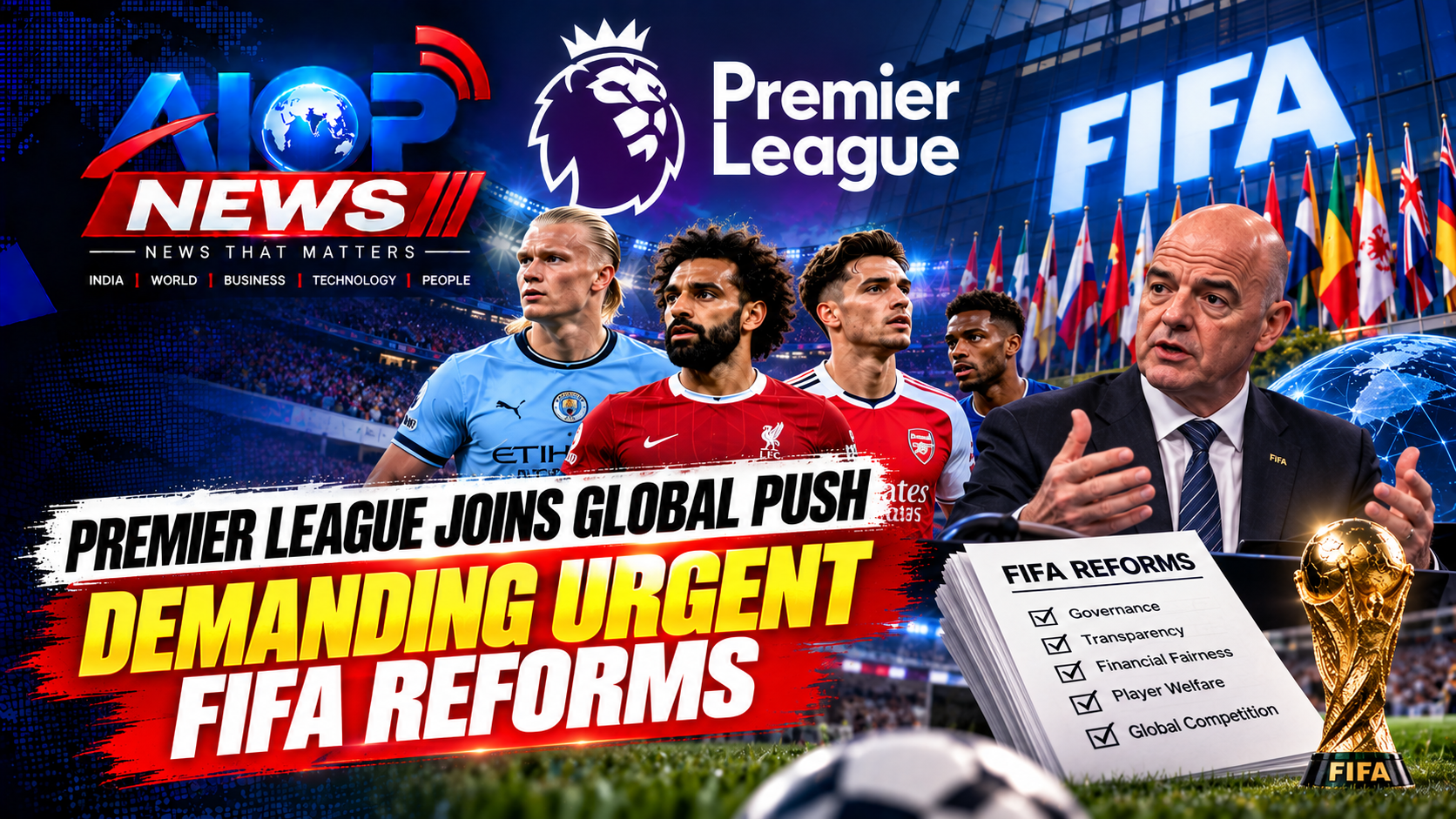
The English Premier League has officially joined forces with global player unions and domestic leagues to demand immediate and sweeping governance reforms from FIFA. This historic alliance highlights the escalating civil war at the summit of world football, driven by growing resentment over an increasingly congested match calendar and a perceived lack of consultation from the sport's global governing body.
A United Front in Sports Governance
The decision to challenge FIFA’s decision-making processes represents a significant escalation in the ongoing battle for control over the football schedule. The Premier League, alongside the World Leagues Association (WLA) and the international players' union FIFPRO, has expressed deep concern that the current football ecosystem is reaching a breaking point.
For more updates on this developing story and other breaking news in the world of athletics, visit our dedicated Sports section.
Player Welfare and the Congested Match Calendar
At the heart of the dispute is the rapidly expanding football calendar. With FIFA introducing an expanded 32-team Club World Cup and UEFA modifying the Champions League format to include more matches, elite players are facing unprecedented physical demands. managers and players alike have raised alarms over the severe risk of burnout and career-threatening injuries.
Critics argue that FIFA is prioritizing commercial revenue over the physical and mental well-being of the athletes. By unilaterally expanding tournaments without meaningful agreement from domestic leagues, FIFA is accused of abusing its regulatory power as both a governing body and a tournament organizer.
The Threat of Legal Action
The coalition of leagues and unions has threatened to take formal legal action against FIFA if their concerns are not addressed. They argue that FIFA’s current governance structure constitutes a conflict of interest, as the organization acts as the sole governing authority while simultaneously promoting its own commercial competitions that directly compete with domestic leagues like the Premier League.
The Demand for Structural Change
The group’s demands go beyond simple scheduling adjustments; they are calling for a fundamental restructuring of how global football decisions are made. The Premier League and its allies want a formal, legally binding governance framework that guarantees domestic leagues and players a co-decision-making role in defining the international match calendar.
According to a report by BBC Sport, the formal complaint claims FIFA’s decisions violate European Union competition law, marking a critical turning point in the relationship between club football and the global governing body.
Conclusion: A Critical Turning Point for Football
The Premier League’s decision to join the call for FIFA reforms represents a defining moment in modern sports governance. As domestic leagues and player unions unite, the pressure on FIFA to modernize its leadership and share decision-making power has never been greater. Whether this leads to a landmark legal battle or a collaborative restructuring of the international calendar, the outcome will shape the future of professional football for generations to come.