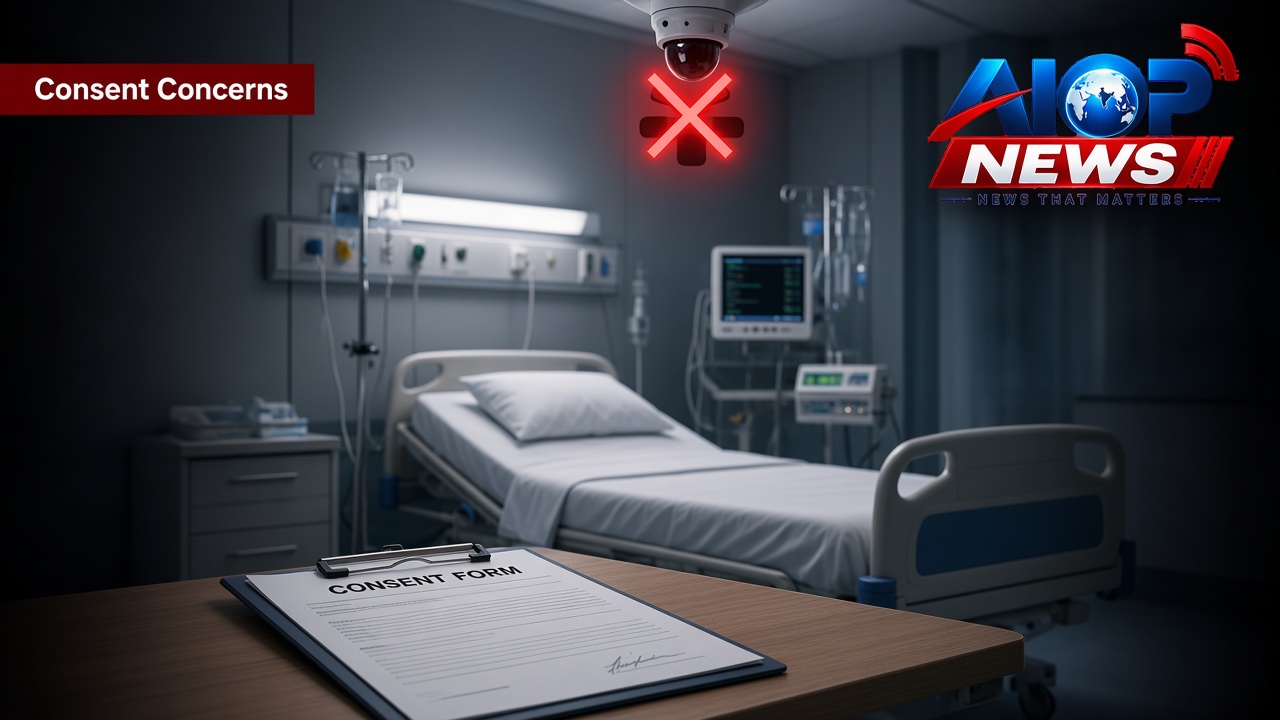
Ten National Health Service (NHS) trusts have been officially referred over concerns regarding how patient consent is obtained and managed for bedroom monitoring technologies. The referrals focus on the deployment of specialized surveillance and optical equipment installed inside hospital bedrooms, raising critical questions about patient rights, transparency, and data governance within the Health sector.
Infrared Monitoring in Patient Bedrooms
At the center of the referrals is the use of non-invasive infrared technology deployed directly in patients' bedrooms. This equipment is designed to track vital health indicators continuously without requiring physical attachment to the patient's body.
According to technical specifications associated with these deployments, the infrared devices have the capability to monitor fundamental physiological signs, specifically:
- Breathing patterns and respiratory rates
- Pulse and cardiovascular metrics
While such digital health tools are often implemented to enhance patient safety, rapid response times, and clinical oversight, the physical presence of sensors inside private resting quarters has brought patient privacy and the adequacy of consent mechanisms into sharp focus.
Consent and Ethical Standards in Healthcare
The core issue leading to the referral of the ten NHS trusts relates to the mechanisms through which consent is requested and recorded. In modern healthcare environments, patient autonomy and informed consent remain foundational legal and clinical requirements. When monitoring devices are placed inside private hospital rooms, patients and their advocates expect clear communication regarding what data is being gathered, how it is interpreted, and who has access to it.
Continuous room-based surveillance, even when automated and utilizing infrared spectrum rather than standard video streams, represents a form of observation that demands unambiguous operational guidelines. The referral of ten separate trusts highlights widespread concern regarding whether standard consent protocols have been applied uniformly and transparently across participating healthcare facilities.
The Dual Challenge of Innovation and Patient Rights
The implementation of automated monitoring reflects a broader transition across public healthcare to incorporate digital health innovations. Devices capable of reading breathing and pulse rates remotely can offer clinical teams vital early warnings if a patient's condition deteriorates during the night or when staff are not in the room.
However, digital health adoption frequently encounters challenges when technological capabilities outpace standard governance frameworks. Without explicit, documented, and fully informed consent, the introduction of sensors into patient bedrooms risks undermining patient trust, particularly among vulnerable individuals undergoing inpatient care.
Next Steps and Oversight
The referral of these ten trusts prompts formal reviews into clinical oversight, administrative accountability, and communication standards within the affected hospitals. Healthcare regulators and trust leadership must address how bedroom-based infrared technologies are integrated into care pathways without infringing upon established standards of consent.
As confirmed by reporting from BBC News, the situation has put NHS digital monitoring practices under close regulatory scrutiny. Ensuring that patient consent is properly obtained remains paramount as health systems continue to navigate the deployment of advanced surveillance technologies in clinical settings.