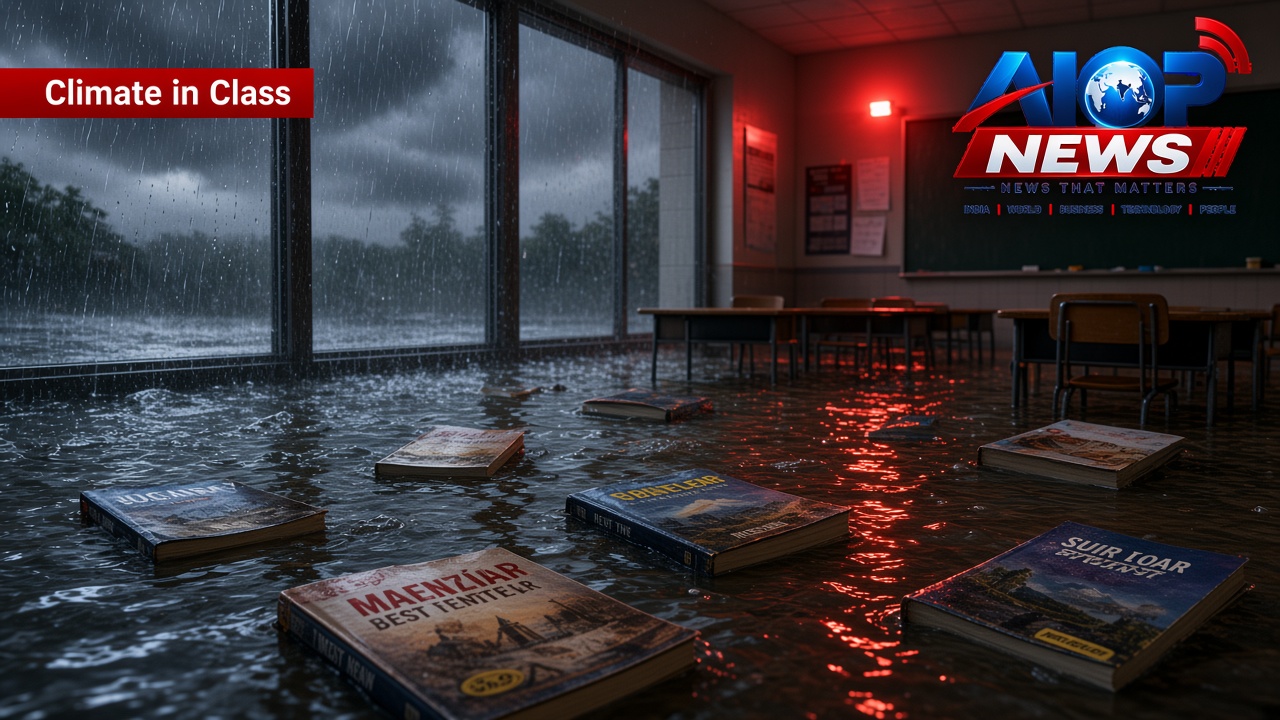
The Growing Intersection of Climate Change and Education
As global weather patterns become increasingly erratic, the traditional school year is facing a formidable new adversary: extreme weather. From punishing heatwaves and devastating wildfires to sudden torrential floods and severe winter storms, climate-related disruptions are no longer isolated incidents. Instead, they have become a recurring crisis, fundamentally altering the landscape of modern education and stalling academic progress for millions of students worldwide.
According to a recent report highlighted by Education Week, the cumulative impact of these interruptions goes far beyond a few missed snow days. School districts are grappling with infrastructural failures, chronic absenteeism, and profound psychological tolls that directly impede student success.
Infrastructure Deficits and the Heat Crisis
One of the most immediate threats to student learning stems from aging school infrastructure ill-equipped for extreme temperatures. When early autumn or late spring heatwaves strike, thousands of schools across the country operate without adequate air conditioning.
The Cognitive Cost of Heat
Scientific studies consistently show that elevated indoor temperatures impair cognitive function, reduce concentration, and hinder memory retention. When classrooms become sweltering, the learning environment deteriorates rapidly. Consequently, school administrators are frequently forced to implement early dismissals or transition to remote learning, both of which heavily disrupt instructional continuity and working parents.
Widening Achievement Gaps and Learning Loss
While school closures impact entire communities, the burden of extreme weather is not distributed equally. Students from low-income households and marginalized communities often bear the brunt of climate-related educational setbacks.
When schools close due to natural disasters or severe weather events, affluent districts can often pivot seamlessly to robust virtual learning models. However, under-resourced districts may struggle with digital divides, lacking reliable internet access or devices for every student. This disparity exacerbates existing achievement gaps, stalling academic recovery and widening long-term educational inequities. For broader insights into these systemic challenges, explore our dedicated Category: Education archive.
The Hidden Toll: Mental Health and Attendance
Beyond direct instructional hours, extreme weather events trigger chronic absenteeism and heightened anxiety among students. Displaced families, property damage, and the constant threat of environmental disasters foster a pervasive sense of climate anxiety.
- Chronic Absenteeism: Repeated school closures and transportation halts lead to missed foundational milestones.
- Psychological Stress: Trauma from severe weather events diminishes students' emotional capacity to focus on academics.
- Nutrition Gaps: Many vulnerable students rely on schools for daily meals, which are cut off during weather-related closures.
Adapting School Systems for a Resilient Future
To safeguard the future of academic progress, educational policymakers and community leaders must transition from reactive measures to proactive resilience. Investing in sustainable school infrastructure—such as HVAC upgrades, solar-powered microgrids, and weather-resistant building materials—is no longer optional. Furthermore, updating emergency preparedness curricula and mental health support systems will be vital in helping students navigate an uncertain environmental future.
Conclusion
The escalating threat of extreme weather to student learning serves as a critical wake-up call for the education sector. Protecting academic progress requires urgent modernization of school facilities, equitable resource distribution, and comprehensive climate adaptation strategies. Ensuring that every student has uninterrupted access to a safe, stable learning environment is paramount to securing future generations' success.