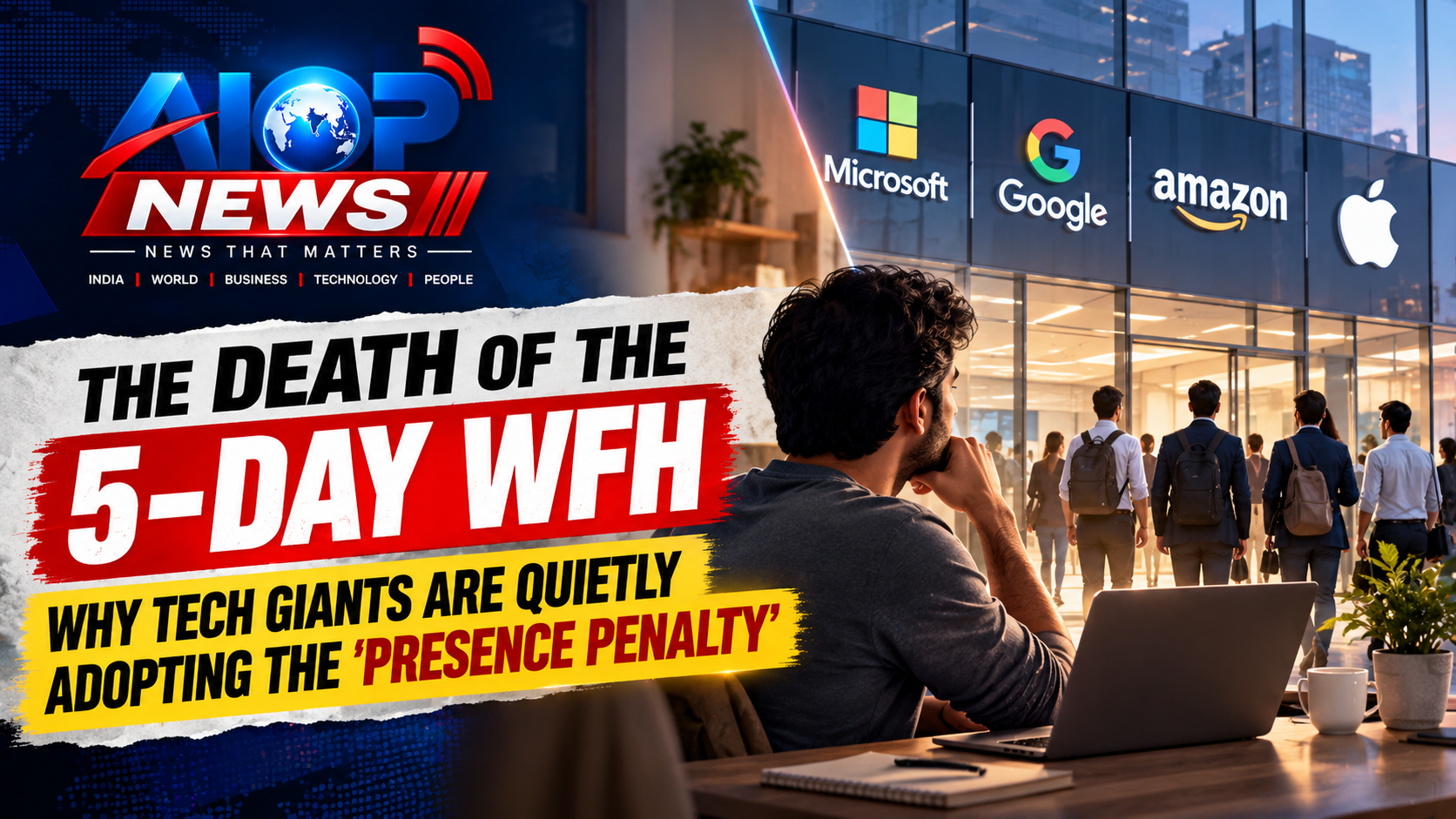
For years, the five-day Work From Home (WFH) model was celebrated as the ultimate perk of the modern digital economy. Driven by pandemic-era necessity, tech giants led the charge in redefining the corporate workplace, offering employees unprecedented flexibility. However, the pendulum has swung back. The era of unconditional remote work is drawing to a close, replaced by strict return-to-office (RTO) mandates and a subtle enforcement strategy known as the 'presence penalty.'
Across Silicon Valley and international tech hubs, business leaders are shifting away from voluntary hybrid models toward enforced physical attendance. Employees who choose to stay entirely remote are discovering that while their jobs may remain intact for now, their career trajectories, promotional opportunities, and compensation growth are taking a significant hit.
What is the 'Presence Penalty'?
The term 'presence penalty' refers to the systemic disadvantage faced by fully remote employees compared to their in-office counterparts. Rather than issuing outright terminations for failing to report to corporate headquarters, major enterprise companies are utilizing structural incentives and penalties to compel attendance.
Recent developments across the tech sector highlight how this policy manifests in practice:
- Promotion Restrictions: Leading hardware and software firms have explicitly notified remote employees that they will no longer be eligible for promotions unless they transition to hybrid or full-time in-office roles.
- Performance Review Integration: Human resources departments are increasingly tying badge-swipe data directly to quarterly and annual performance reviews, penalizing workers who fail to meet minimum office day requirements.
- Compensation and Bonus Adjustments: Some corporations are weighing office attendance into discretionary bonus pools and stock grant allocations, effectively reducing total compensation for remote staff.
Proximity Bias and the Death of Pure Remote Work
At the heart of the presence penalty is a resurgence of proximity bias—the unconscious tendency of executives and team leads to favor employees who are physically present. Despite years of data suggesting that remote workers maintain high individual productivity, business leaders argue that critical corporate functions suffer without in-person interaction.
Corporate executives point to several operational challenges driving the push back to desk-centric work:
- Spontaneous Innovation: The belief that creative breakthroughs and cross-departmental collaboration occur more naturally during unscheduled, face-to-face conversations.
- Onboarding and Mentorship: Difficulty in effectively training junior software engineers and entry-level corporate talent through screens alone.
- Corporate Real Estate Investments: Multi-billion-dollar long-term leases on state-of-the-art office campuses that sit largely underutilized.
Employee Backlash and the Changing Labor Market
The implementation of presence penalties has sparked friction between corporate leadership and staff. Thousands of tech workers bought homes far from metropolitan tech hubs during the peak of the WFH boom, relying on promises of permanent flexibility. For these workers, complying with RTO demands requires costly commutes or drastic relocations.
Industry analysts note that tech leaders are aware of the pushback and may view the presence penalty as a form of 'silent attrition.' By tightening attendance policies, firms can reduce headcount organically without triggering formal layoff announcements, severance costs, or negative headlines in a tightening economic environment.
The Future of Work: Balancing Flexibility with Visibility
The decline of the five-day work-from-home schedule does not mean the complete death of flexible arrangements, but it does mark the end of pure remote dominance in big tech. The emerging standard for enterprise firms is a structured 3-day or 4-day hybrid model, where physical presence is non-negotiable for career advancement.
For professionals navigating this evolving business landscape, visibility has once again become currency. While full WFH options may persist at smaller startups competing for talent, the dominant tech giants have made their stance clear: to climb the corporate ladder, employees must show up in person.