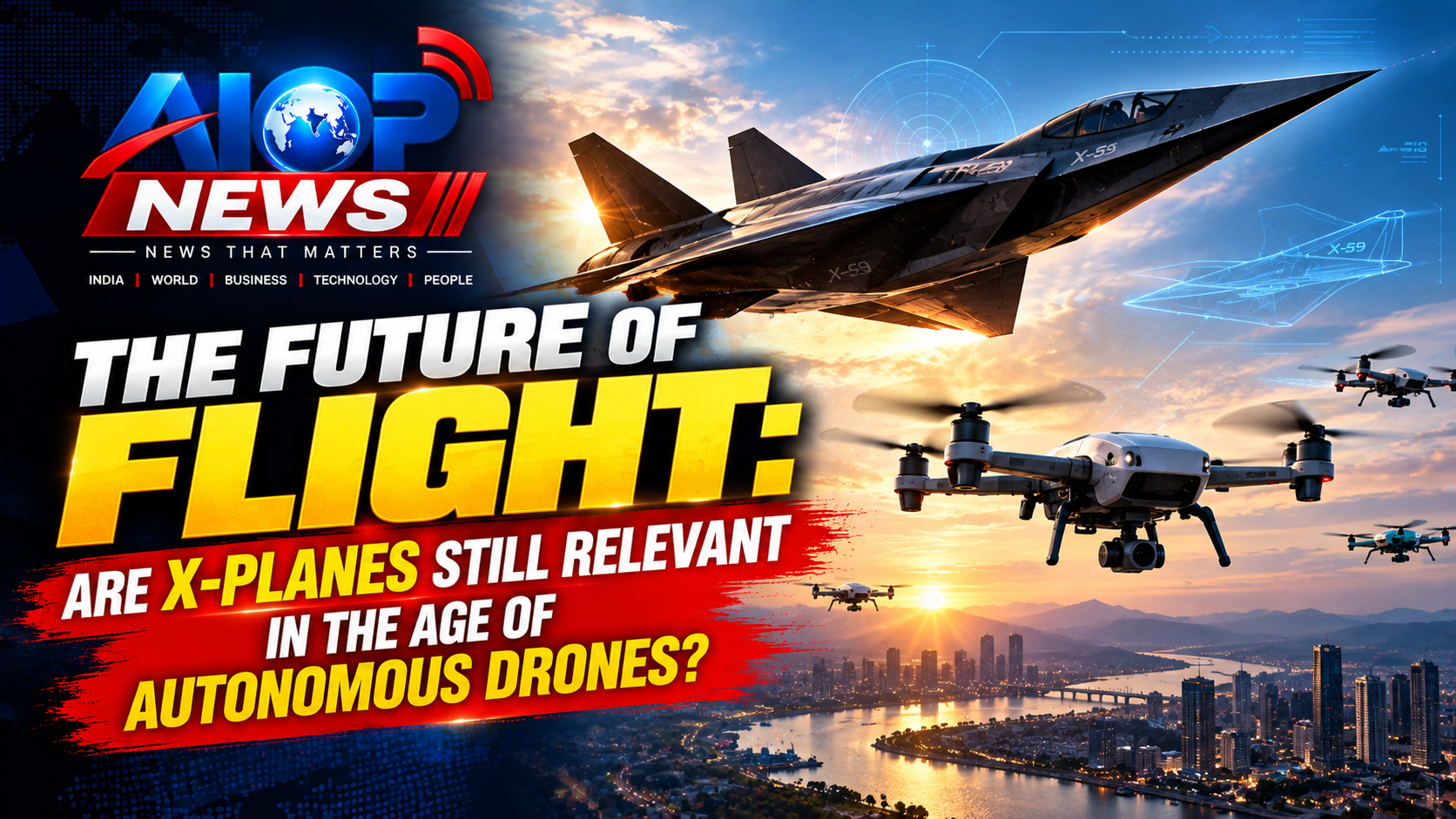
For decades, experimental X-planes have stood at the pinnacle of aerospace innovation, pushing the boundaries of speed, altitude, and aerodynamic design. From the Bell X-1 breaking the sound barrier to modern stealth demonstrators, these piloted and unpiloted research aircraft have paved the way for modern aviation. However, as the global aerospace industry undergoes a massive shift toward artificial intelligence and unmanned systems, a pressing question arises: Are X-planes still needed in the new era of drones?
The Evolution of Aerospace Testing
To understand the current debate, one must look at how aerospace research has transformed. Traditionally, X-planes were built to test hypotheses that wind tunnels and early computer simulations simply could not predict. These aircraft carried immense financial and human risk, but the data harvested was invaluable for both military and commercial aviation.
Today, the landscape of Technology has evolved exponentially. Advanced computational fluid dynamics (CFD), virtual reality, and machine learning allow engineers to simulate extreme flight conditions with unprecedented accuracy before a single piece of metal is cut. According to a recent report by the BBC, the rapid advancement in digital prototyping has fundamentally changed how aerospace agencies approach new vehicle development (source: BBC News).
Why Drones Are Changing the Game
Unmanned aerial vehicles (UAVs) and autonomous systems offer a distinct advantage over traditional experimental aircraft: they are cheaper to build, faster to iterate, and completely expendable. When testing radical hypersonic speeds or volatile propulsion systems, the loss of a multi-million-dollar drone is a setback, not a tragedy.
The Rise of Autonomous Flight Research
Autonomous systems can execute high-risk maneuvers and pull G-forces that would incapacitate a human pilot. Because modern drones rely on sophisticated AI algorithms, they can learn from flight anomalies in real-time, adapting their control surfaces and propulsion in ways that a legacy X-plane never could. This has led many defense contractors and space agencies to redirect funding from crewed experimental jets toward swarming drone technology and AI-driven flight testbeds.
Are Traditional X-Planes Obsolete?
Despite the dominance of drones, aviation authorities argue that traditional X-planes are far from obsolete. Drones excel at data collection and algorithmic testing, but they cannot fully replicate the complexities of integrating human-piloted systems, massive cargo payloads, or certifying commercial supersonic travel for passenger use.
Furthermore, many modern "X-planes" have actually transformed into large-scale drone prototypes themselves. NASA and the US Air Force continue to fund experimental aircraft projects—such as quiet supersonic demonstrators and hybrid-electric concepts—that bridge the gap between unmanned scalability and full-size aircraft utility.
Conclusion
The dawn of the drone era has undeniably disrupted traditional aerospace testing, but it has not eliminated the need for X-planes. Instead, the definition of an experimental aircraft is shifting. By merging cutting-edge AI, digital simulation, and physical flight testbeds, the next generation of X-planes will continue to inspire the future of flight, proving that innovation requires both the digital agility of drones and the physical validation of experimental aircraft.