As anticipation builds for director Jon Favreau’s upcoming feature film The Mandalorian and Grogu, Industrial Light & Magic (ILM) animation supervisor Hal Hickel has shared insights into the movie’s visual effects strategy. Speaking about the creative development behind the production, Hickel revealed how the team anchored modern digital artistry in practical cinematic traditions, drawing heavy inspiration from stop-motion pioneer Phil Tippett while executing character updates like Rotta’s redesign.
For movie fans following updates across the entertainment industry, Hickel's perspective highlights how contemporary blockbusters continue to draw strength from practical filmmaking heritage to deliver authentic sci-fi visual spectacle.
Channelling Phil Tippett’s Practical Legacy
When approaching the complex visual effects and action sequences for The Mandalorian and Grogu, animation supervisor Hal Hickel relied on a deceptively simple creative benchmark: “What would Phil do?”
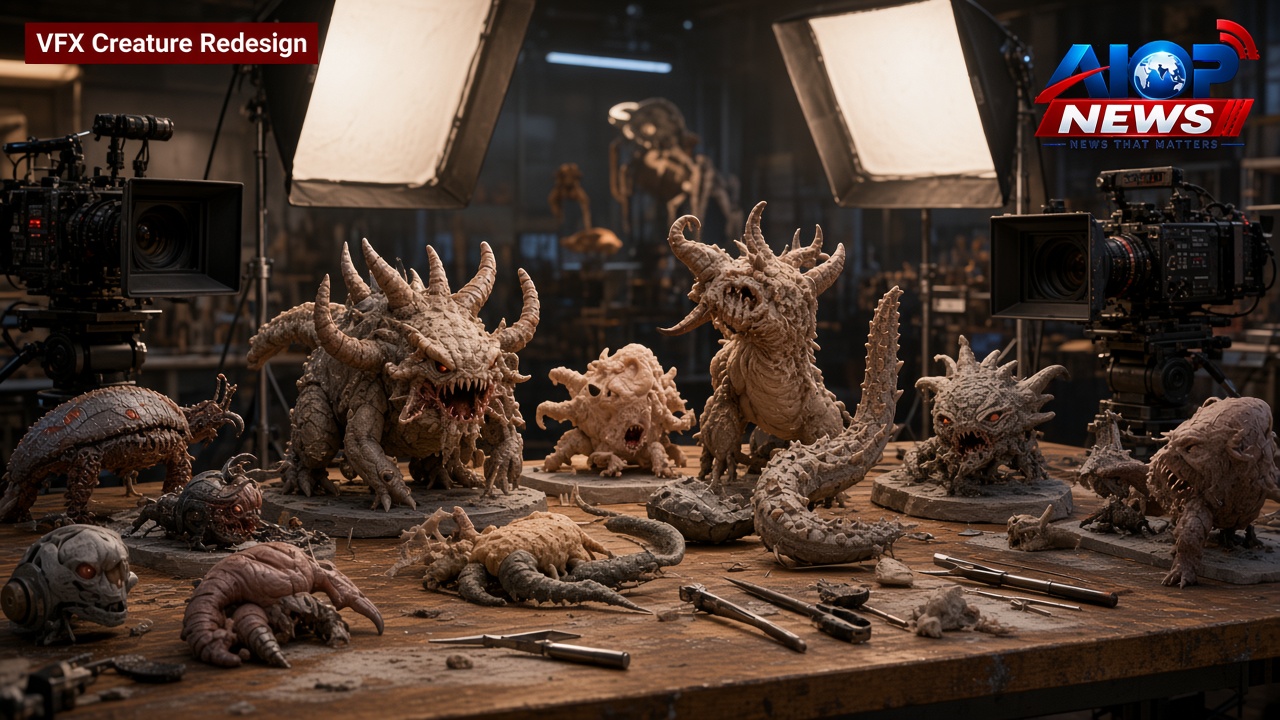
The pioneer in question is stop-motion legend Phil Tippett, whose influential work on the original Star Wars trilogy established a blueprint for cinematic visual effects. Tippett’s craft birthed iconic moments ranging from the lumbering movement of AT-AT walkers to memorable creature animation and dynamic battle scenes.
By constantly asking how Tippett would handle motion and weight in a scene, Hickel and the animation team at Industrial Light & Magic sought to infuse the modern digital process with a tactile, physical quality. Rather than leaning purely on smooth computer graphics, ILM used Tippett's practical style as a foundational template to keep creature interactions and battle sequences feeling grounded and visceral.
Rotta’s Redesign and Jon Favreau’s Action Philosophy
In addition to honoring legacy effects techniques, Hickel’s visual effects team faced the creative challenge of character updates, including a distinct redesign for Rotta. Updating familiar figures for a new feature film required balancing established character history with contemporary visual fidelity.
Director Jon Favreau also introduced a clear thematic direction for the film's action and choreography, framing the tone around a “Less James Bond, More Jackass” philosophy. While classic action cinema often aims for sleek, effortless perfection, Favreau’s vision highlights raw, unpredictable, and grounded physical energy.
This direction gives the ILM animation team room to embrace chaotic moments, heavy hits, and unpolished stumbles. By steering away from overly polished superhero maneuvers, the film's visual effects aim to convey a sense of genuine peril and spontaneous humor during dynamic set pieces.
Bridging Classic VFX Traditions with Digital Tools
The combination of Phil Tippett's practical animation roots and Jon Favreau's distinct directorial mandate represents a thoughtful evolution in visual storytelling. By filtering modern digital visual effects through traditional stop-motion philosophies, ILM continues to bridge generations of movie-making art.
As detailed in reporting by Variety, this approach promises to give the theatrical feature a distinct visual voice grounded in classic visual effects history.
Summary
Through character updates such as Rotta's redesign, Jon Favreau's raw action aesthetic, and Hal Hickel's homage to Phil Tippett, The Mandalorian and Grogu aims to blend traditional techniques with cutting-edge visual effects. By asking how practical effects pioneers would approach modern digital animation, ILM reinforces that the future of cinematic visual effects relies heavily on honoring classic craft.