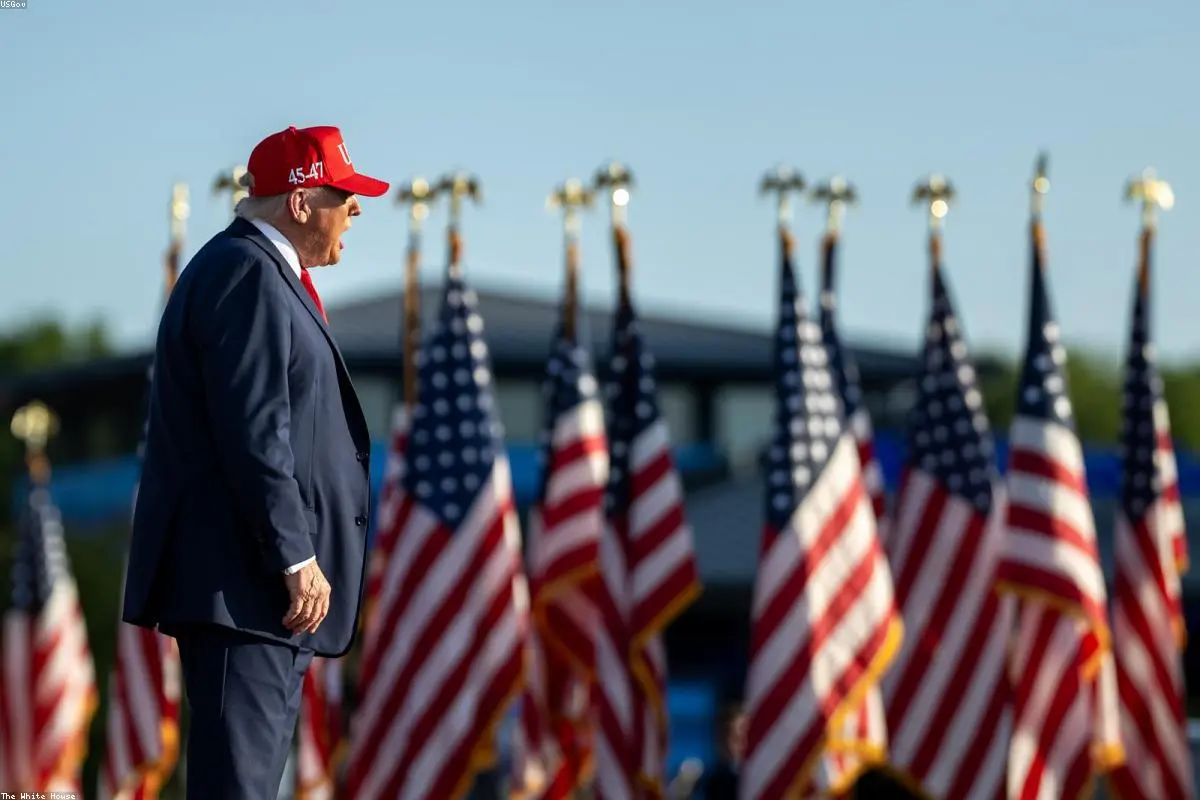
Breaking a Century-Old Tradition
For more than a hundred years, an unspoken rule governed American coinage: the dead get minted, the living wait. That tradition officially came to a crashing halt with the introduction of a new commemorative dollar coin featuring Donald Trump. By appearing on this currency, Trump has achieved a distinction not held by a sitting or former U.S. commander-in-chief in generations, instantly sparking debates among historians, collectors, and political observers alike.
According to reports detailed by the BBC, this release marks a dramatic departure from standard Mint practices. Federal law has traditionally restricted circulating U.S. coins from portraying living people—a safeguard designed to prevent the personalization of state currency reminiscent of European monarchies. However, this specific issue navigates the complex landscape of commemorative pieces, blending novelty, political signaling, and a heavy dose of contemporary Americana.
The Fine Line Between Commemoration and Currency
To understand the weight of this development, one has to look back at the history of American money. The last time a living person graced a widely recognized U.S. coin was Calvin Coolidge in 1925, during the sesquicentennial of American independence. Since then, the policy hardened: portraits of living figures were strictly barred from circulating coinage, relegating living presidents strictly to stamps—and even then, usually only after careful consideration.
This new Trump dollar pushes the boundaries of how political influence intersects with national symbols. While strictly categorized as a commemorative item rather than standard pocket change for daily commerce, its mere existence shifts the paradigm. Observers watching International trends note that while authoritarian regimes frequently place living rulers on banknotes and coins, mature democracies have historically guarded their currency as a neutral symbol of the nation rather than a platform for current political figures.
Numismatic Fascination and Political Symbolism
Naturally, the release has divided public opinion just as sharply as the man himself. Supporters view the coin as a bold collector’s item that celebrates a populist icon who continues to redefine American conservatism. To his base, breaking institutional norms is not a bug, but a feature—a tangible representation of challenging the establishment.
Critics, conversely, see the coin as yet another erosion of democratic norms and institutional guardrails. They argue that currency should unify a nation across partisan lines rather than serve as a divisive artifact of modern political warfare. Numismatists are left caught in the middle, marveling at the craftsmanship and the sheer speed with which the item entered the cultural conversation.
What This Means Moving Forward
As these coins find their way into private collections and investment portfolios, they leave behind a lingering question about the future of American symbolism. Will this remain a one-off anomaly, or does it open the floodgates for future administrations to market themselves through the nation’s currency?
Traditions, once broken, are rarely put back together the same way. Whether viewed as a clever marketing triumph or a breach of civic decorum, the Trump dollar coin has already cemented its place in the history books—proving once again that in modern politics, the old rules simply no longer apply.