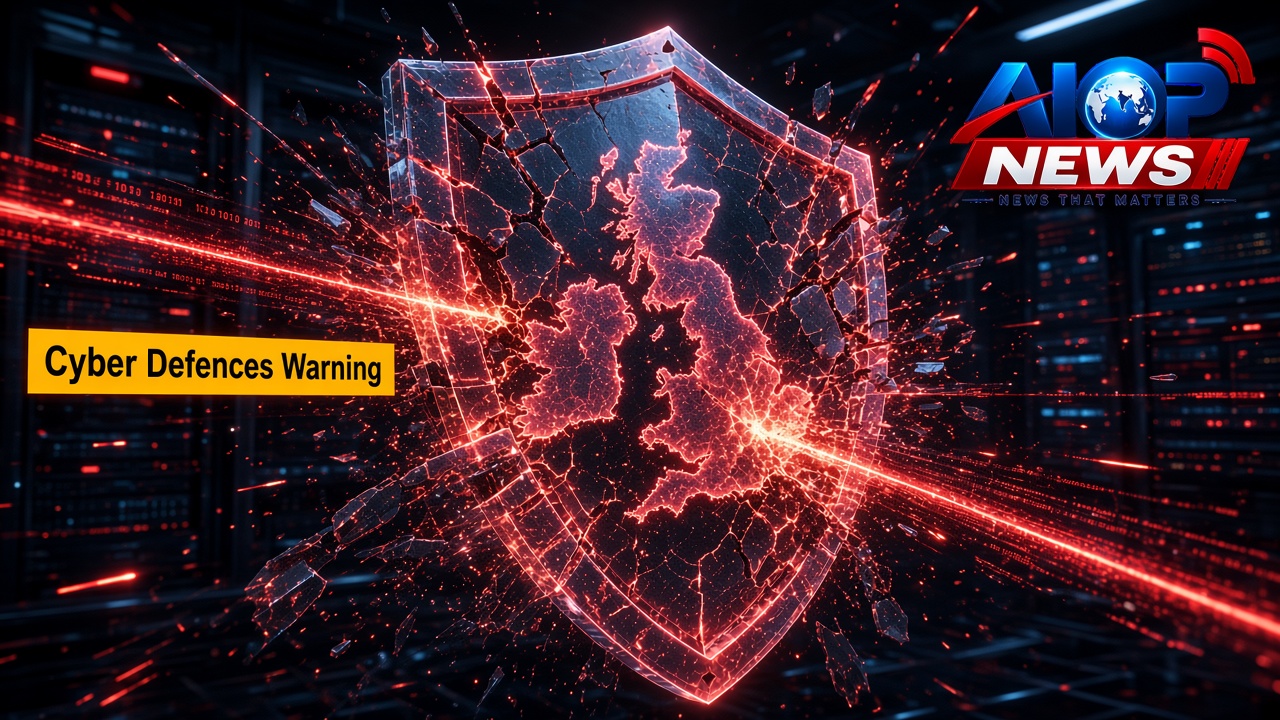
The United Kingdom faces an increasingly complex digital landscape where security incidents are no longer seen as distant possibilities, but as inevitable events. In a frank assessment of the nation's security posture, AI Minister Kanishka Narayan has warned that it is "likely" the UK's cyber defences will be breached. To counter this looming threat, the government has committed to deploying advanced artificial intelligence to strengthen national safeguards and protect vital infrastructure against cyber attacks.
The warning from Kanishka Narayan highlights the critical balance between defensive measures and rapidly advancing adversarial capabilities. As digital networks grow more interconnected, the attack surface expands across public institutions, commercial networks, and essential services.
Government Turns to Advanced AI for National Cyber Defence
In response to the growing vulnerability of digital infrastructure, the government is looking directly toward emerging technology for defensive solutions. Narayan stated that the government will use advanced AI to strengthen the UK against cyber attacks, marking an effort to match and outpace potential threats with automated, high-level technological capabilities.
Advanced AI models offer several defensive advantages in modern cybersecurity frameworks:
- Rapid Threat Detection: Machine learning algorithms can monitor vast streams of network traffic in real time, detecting anomalies and malicious patterns far faster than human analysts.
- Automated Incident Response: Intelligent systems can isolate affected segments of a network instantaneously, mitigating damage before an intrusion spreads.
- Predictive Defence Capabilities: By analyzing past attack patterns, advanced AI can help predict vulnerabilities and recommend proactive security hardening across critical infrastructure.
Implications for the UK Business Landscape
The minister's warning carries substantial implications for the wider UK business community. In modern commerce, public and private sectors are deeply linked through software dependencies, cloud providers, and digital supply networks. An attack targeting public infrastructure can quickly disrupt commercial activity, while vulnerabilities in private enterprise networks can serve as an entry point for wider systemic harm.
Organisations operating across enterprise, financial, and industrial sectors must treat cyber resilience as a core strategic operational priority. While government initiatives will use advanced AI to bolster state protections, business leaders are increasingly called upon to reassess their internal risk management systems, update data handling policies, and ensure their own defences are prepared to withstand targeted intrusions.
From Total Prevention to Systemic Resilience
By acknowledging that breaches are "likely," Narayan points to a fundamental shift in cybersecurity philosophy. Historically, security strategies focused heavily on total perimeter defence—aiming to keep hostile actors out entirely. However, the sophistication of modern cyber attacks has made absolute prevention increasingly unrealistic.
Instead, modern security frameworks prioritise resilience: assuming that intrusions will occur and focusing resources on limiting damage, maintaining business continuity, and recovering operational capacity as swiftly as possible. Integrating advanced AI into defence strategies plays a crucial role in enabling systems to self-heal and neutralise breaches before they trigger widespread disruption.
Navigating Future Digital Challenges
As the UK navigates ongoing developments in artificial intelligence, the duel between offensive capabilities and defensive measures remains central to national policy. The government's decision to deploy advanced AI signals an understanding that traditional, manual cybersecurity approaches are no longer sufficient to safeguard digital assets.
While the prospect of breached defences presents serious risks, the commitment to leveraging advanced artificial intelligence offers a pathway toward stronger, more adaptive defences. Moving forward, collaboration between state authorities and the broader commercial sector will be vital to ensuring that both the public and private spheres remain resilient in the face of evolving cyber risks.
For more background on this developing story, refer to the original reporting provided by the BBC.