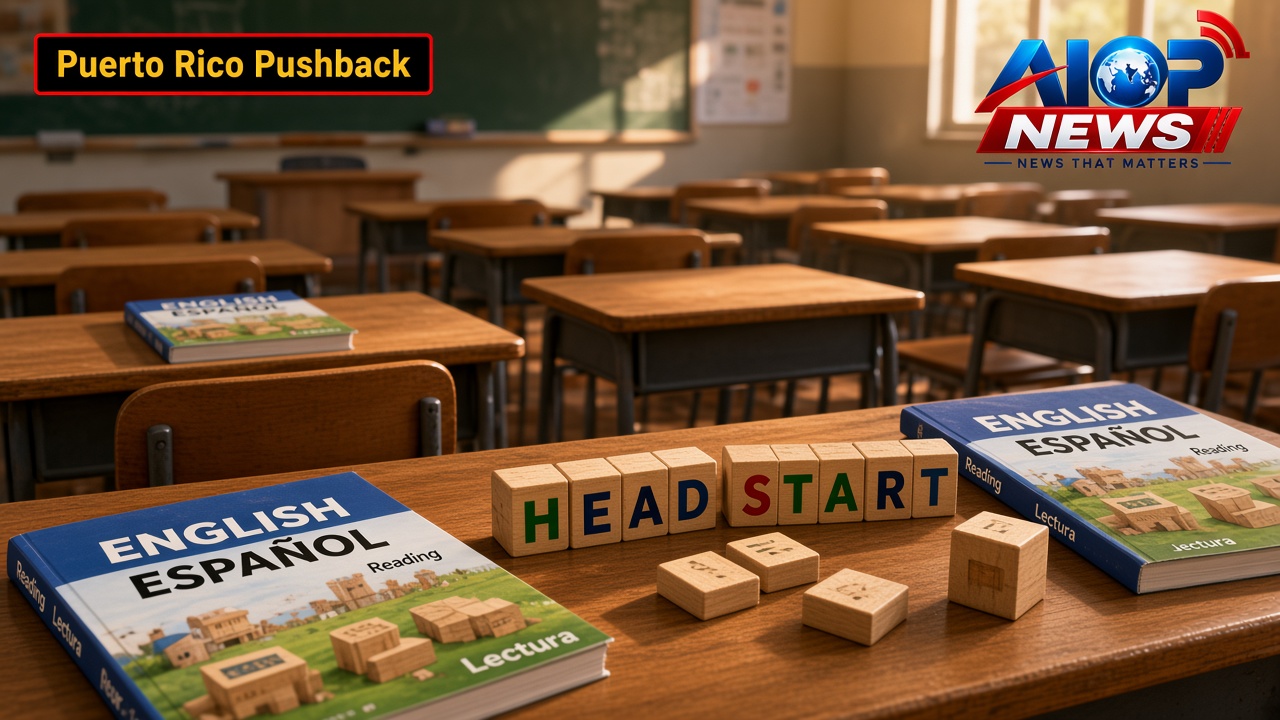
A federal proposal put forward by Donald Trump to mandate English-language instruction at Head Start centers has triggered significant pushback in Puerto Rico. Community members, families, and early childhood advocates across the island are raising alarms over the potential shift, voicing deep concerns regarding its lasting impact on young learners.
According to coverage by Education Week, the proposal would alter language requirements across federally funded early education facilities. In response, local stakeholders in Puerto Rico are challenging the measure, arguing that imposing language directives from Washington fails to respect the linguistic and cultural realities of the territory.
Pushback Across Early Learning Communities
Head Start centers have long provided comprehensive early childhood development, health, and family support services to low-income households. In Puerto Rico, where Spanish is the primary language spoken at home and across civil society, these centers serve as foundational learning environments tailored to the island's community needs.
The pushback highlights growing tensions within national education policy regarding language instruction in federal programs. Rather than welcoming an English-only or English-dominant standard, stakeholders in Puerto Rico have balked at the requirement, arguing that language policies should reflect the communities they are designed to serve.
Cultural Identity and Childhood Development
Central to the resistance are warnings from both families and teaching professionals regarding cultural preservation. Parents and educators warn the change could undermine children's connection to their culture at a uniquely vulnerable and formative stage of their lives.
The Significance of Native Language in Early Learning
Early childhood development relies heavily on building cognitive and communicative foundations in a child’s native tongue. For children in Puerto Rico, learning and communicating in Spanish reinforces ties with family members, neighborhoods, and regional heritage. Community advocates caution that requiring English at this vital stage could inadvertently sever those essential bonds.
Educators emphasize that early learning environments should nurture self-identity and self-esteem. When young children are required to use a language different from the one spoken by their families and immediate surroundings, educators warn that it creates an unnecessary barrier to learning while signaling that their home language is somehow deficient.
Debate Over Federal Directives in Head Start
The controversy surrounding the proposal underscores long-standing debates over federal control versus local educational autonomy. While proponents of English mandates often point to standardizing federal initiatives across jurisdictions, critics argue that a blanket requirement ignores the unique political, social, and cultural context of Puerto Rico.
Head Start has historically operated with a degree of community-driven design, allowing local providers to tailor early intervention services to the exact needs of participating children. Enforcing a strict English requirement would represent a sharp departure from that philosophy, prompting educators to question how effectively local centers could operate if such mandates were implemented without local support.
Conclusion
The proposal from Donald Trump to introduce an English mandate across Head Start centers has brought cultural, educational, and federal governance questions to the forefront in Puerto Rico. As educators and parents continue to raise their voices, their core message remains unambiguous: early learning must support the whole child, preserving their language and cultural heritage rather than replacing it with an external mandate. How federal policymakers navigate this pushback will remain a critical issue for early childhood education moving forward.