The Quiet Hallway Dilemma
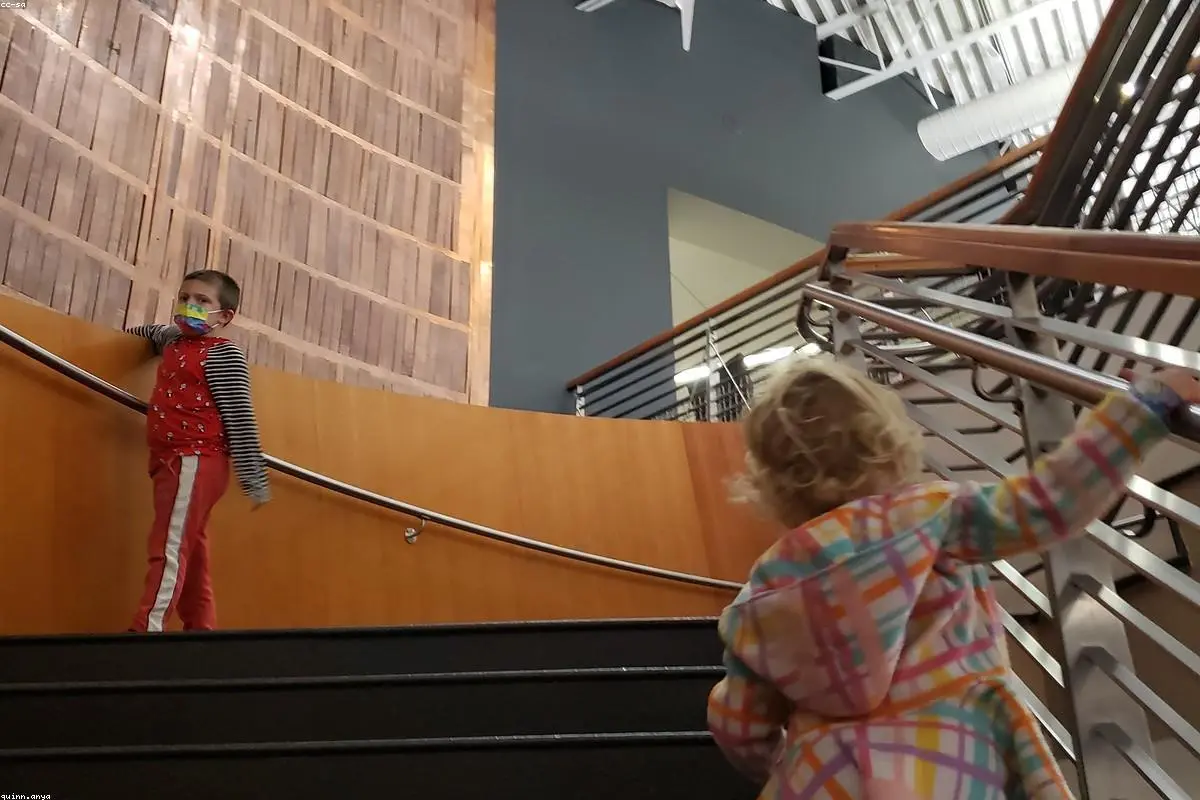
Imagine a hallway designed for the long strides of fifth graders and the organized chaos of middle schoolers. Now, picture a four-year-old in that same space, expected to walk in a perfectly straight line, fingers pressed to lips in a gesture of silence. It is a scene playing out with increasing frequency across the country as the push for universal Pre-K moves from a policy dream to a physical reality within the walls of traditional elementary schools.
While the expansion of early childhood programs is a victory for accessibility, it has brought an unintended consequence that educators call "schoolification." This phenomenon occurs when the play-based, messy, and movement-heavy world of early childhood is squeezed into the standardized, data-driven machinery of the K-12 system. Instead of schools adapting to the needs of toddlers, the toddlers are being asked to adapt to the rigors of the institution.
As detailed in a recent report by Education Week, the physical and cultural environment of a school can dictate the pedagogy. When a Pre-K classroom is tucked between a third-grade math wing and a fourth-grade science lab, the pressure to maintain "order" often overrides the developmental necessity of loud, active play. For more insights into how these policy shifts affect the classroom, you can explore our latest coverage in the Education section.
The Conflict Between Logistics and Development
The primary driver behind this shift isn't necessarily a lack of empathy from administrators, but rather the sheer logistics of the American school day. When a four-year-old attends school in a large elementary building, they must follow the same bell schedules, use the same crowded cafeterias, and navigate the same disciplinary expectations as students twice their age. Teachers often feel pressured to keep their young charges quiet to avoid disrupting the older students taking standardized tests next door.
This creates a fundamental mismatch. Developmentally, four-year-olds learn through vocalization, social negotiation, and physical exploration. Asking a child at this stage to sit still for extended periods or to walk in a silent line suppresses the very behaviors that indicate healthy cognitive growth. When we prioritize a quiet hallway over a child’s need to move, we aren't just teaching them to be polite; we are potentially stifling their natural engagement with the learning process.
The Loss of Play-Based Learning
One of the most significant casualties of Pre-K expansion into traditional schools is the erosion of play. In a dedicated early childhood center, the day is often fluid, revolving around interest centers, sensory bins, and outdoor exploration. However, within the K-12 framework, there is an inherent pull toward "academic readiness."
This shift often results in more time spent on worksheets and whole-group instruction—methods that are effective for older children but largely inappropriate for the Pre-K set. Critics argue that we are treating four-year-olds like "short fourth graders" rather than children in a distinct and critical stage of biological development. The pressure to show measurable progress in literacy and numeracy can lead to the marginalization of social-emotional learning, which is the actual foundation of long-term academic success.
Teachers Caught in the Middle
The burden of this transition falls heavily on the shoulders of teachers. Many early childhood educators are trained in the importance of play and child-led inquiry, yet they find themselves working under principals who are more accustomed to evaluating teachers based on quiet classrooms and strictly followed schedules. It is a professional tug-of-war: the teacher knows the child needs to crawl on the floor to understand spatial relationships, but the administrator wants to see students sitting at desks to prove they are "learning."
Furthermore, the physical infrastructure of older school buildings often lacks the basic necessities for very young children. Sinks are too high, toilets are in separate hallways rather than in the classroom, and playgrounds are designed for older kids with better grip strength and higher centers of gravity. These daily hurdles reinforce a sense of being out of place, both for the students and the staff trying to support them.
Finding a Middle Ground
The solution isn't to stop the expansion of Pre-K—the benefits of early education are well-documented and life-changing for many families. Instead, the focus must shift toward protecting the integrity of early childhood within the larger school system. This means designing "schools within schools" that have their own rules, their own physical modifications, and a culture that celebrates the noise and movement of childhood.
Districts that have successfully integrated Pre-K often do so by providing specialized training for elementary principals, ensuring they understand that a "good" Pre-K classroom should look and sound very different from a fifth-grade one. It requires a commitment to autonomy, allowing early childhood educators to set their own schedules and prioritize play without the fear of being seen as "un-academic."
Ultimately, getting in line might be a useful skill for a student to learn eventually, but for a four-year-old, the most important line is the one they draw themselves while exploring the world through play. As we continue to expand access to education, we must ensure that we aren't sacrificing the magic of childhood on the altar of institutional efficiency.