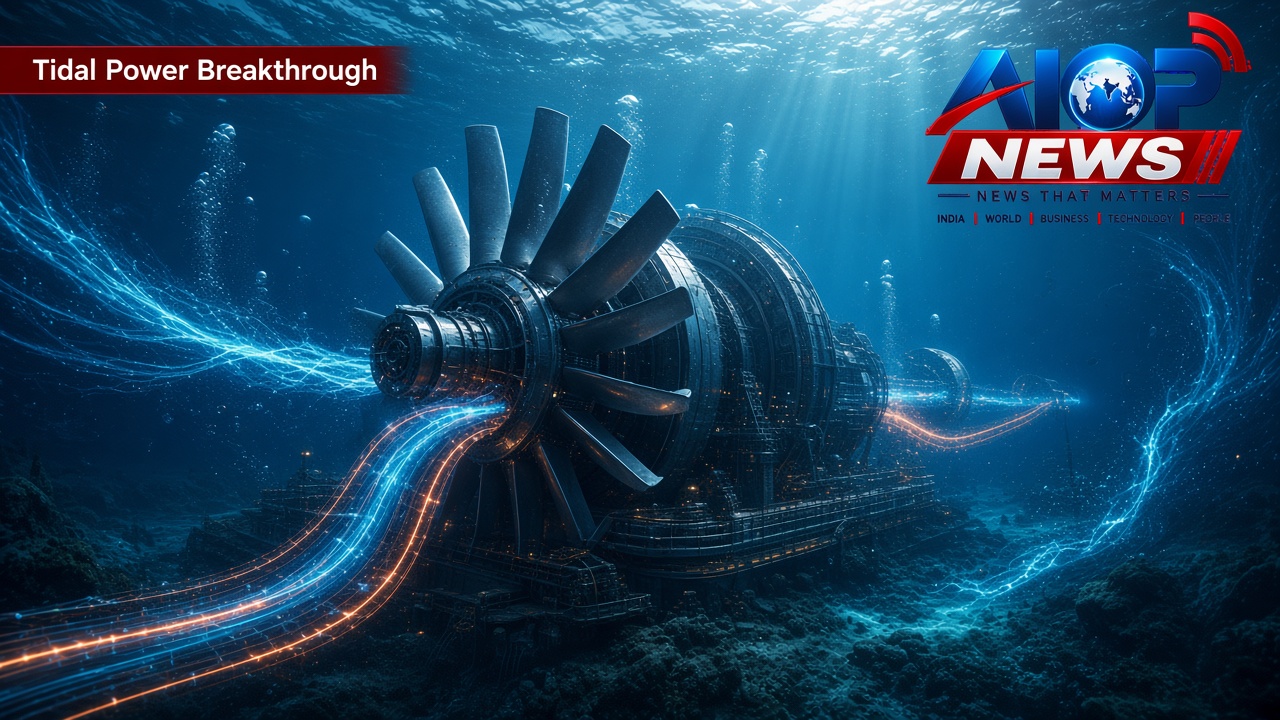
Coastal communities around the world have long looked out across the ocean, but the water itself may hold the key to solving modern energy demands. As regional leaders and energy planners explore dependable green solutions, the rhythmic motion of the tides represents an abundant, largely untapped resource. Engineer David Mummery has developed a tidal energy generator that he believes can change lives for people living in coastal communities, turning natural marine currents into a reliable power source for local populations.
Harnessing Marine Power for Coastal Populations
For shoreline settlements, securing consistent and affordable power presents unique challenges. Many coastal towns are situated at the fringes of national power grids, making them susceptible to infrastructure strain and higher transmission costs. Marine power offers an intuitive alternative, leveraging the predictable movement of seawater to generate electricity right where it is consumed.
Engineer David Mummery's innovative tidal energy generator aims to directly address these local energy realities. By capturing the kinetic energy inherent in the sea, the device is designed to provide meaningful support to coastal towns. According to Mummery, the application of this technology has the potential to transform daily life for shoreline residents by introducing a stable and locally accessible clean energy supply.
The Economic and Business Impact of Tidal Technology
Beyond addressing domestic energy needs, advancing tidal generation offers wide-ranging commercial opportunities. In the broader business landscape, the push toward net-zero infrastructure has created substantial demand for emerging clean technology. Coastal economies that integrate marine energy can attract fresh commercial investment, cultivate high-skilled maritime engineering employment, and establish local supply chains focused on marine manufacturing and maintenance.
Marine energy projects also provide regional businesses with a pathway toward insulation from broader volatile energy markets. When coastal industrial facilities, ports, and commercial enterprises gain access to power generated from neighbouring waters, operational predictability improves. As enterprises focus on sustainability, adopting marine technology positions coastal hubs as leaders in the transition toward low-carbon operations.
Predictability: The Distinct Advantage of Ocean Tides
While solar and wind generation are fundamental components of modern energy systems, both are subject to sudden atmospheric changes. By contrast, ocean tides follow regular gravitational cycles governed by the moon and sun, making tidal currents one of the most predictable renewable energy sources on the planet.
Because tidal flows can be forecasted months and even years in advance, grid operators and local councils can accurately model generation capacity. The introduction of Mummery's tidal generator seeks to capitalise on this natural consistency. For seaside towns that often weather harsh oceanic conditions, turning those rough waters into a continuous asset represents an essential evolutionary step in energy infrastructure design.
Looking Ahead for Shoreline Communities
The movement to capture sea power reflects a wider shift toward decentralized energy generation, where communities generate clean electricity from their immediate environment. If tidal energy systems can be scaled and integrated into everyday municipal infrastructure, they could serve as a model for regional self-sufficiency.
As developments continue, the work by David Mummery underscores the valuable role of dedicated engineering in solving localized energy challenges. Transforming the hidden kinetic force of coastal waters into practical, everyday electricity could redefine what is possible for coastal settlements seeking economic resilience and energy security.
Additional reporting based on coverage from BBC News.